Top Content Marketers: 12 Experts to Follow and Learn From in 2026
Published: 20 Oct 2026
Content marketing has become an important part of how businesses attract customers, build trust, improve brand awareness, and generate leads. However, creating content that consistently delivers results requires more than publishing blog posts or sharing updates on social media. It requires a clear strategy, a strong understanding of the audience, valuable ideas, effective storytelling, and the ability to measure performance. This is why learning from the top content marketers can help business owners, marketing professionals, entrepreneurs, and content creators improve their approach.
Content marketing should also be connected to broader business goals. Our guides to Marketing Strategy and Digital Marketing are useful resources for understanding how content, SEO, and other marketing channels work together to support business growth
The best content marketing experts bring different strengths to the industry. Some specialize in writing and storytelling, while others focus on content strategy, SEO, audience development, analytics, brand communication, or business growth. By studying their work, you can discover practical ways to create useful content, reach the right audience, and connect marketing activities with business objectives.
In this guide, we explore 12 influential content marketing experts, what makes their work valuable, and how you can learn from their approaches. We also explain how to choose the right experts for your goals, which resources to follow, and how to apply their ideas to your own content marketing strategy.
What Makes Someone One of the Top Content Marketers?
The top content marketers are not necessarily the people with the largest social media audiences or the most published articles. Instead, they demonstrate an ability to understand audiences, communicate ideas effectively, develop sustainable content strategies, and help organizations achieve meaningful results.
One important quality is audience understanding. Effective content marketers know how to identify customer questions, challenges, interests, and motivations. They use that understanding to create material that provides genuine value instead of producing content simply to fill a publishing calendar.
Another important quality is strategic thinking. Strong marketers understand how individual articles, videos, newsletters, podcasts, and social media posts contribute to larger objectives. They can connect content creation with brand awareness, audience development, lead generation, customer education, and revenue opportunities.
Furthermore, effective content marketers understand distribution. Even excellent content may struggle to reach its intended audience if it is not promoted through appropriate channels. Experienced professionals consider search engines, email newsletters, social platforms, partnerships, and other relevant distribution methods.
Measurement is equally important. Content performance should be evaluated using suitable metrics, such as qualified website traffic, engagement, conversions, leads, and customer retention. The most useful metric depends on the purpose of the content.
Finally, leading professionals continue learning. Search behavior, technology, audience expectations, and marketing platforms change over time. Studying established experts can provide a strong foundation, but marketers should also test ideas and adapt them to their own audiences.
To better understand the basic principles behind an effective marketing approach, explore our Marketing Fundamentals guide, which explains essential marketing concepts and how they support business objectives.
12 Top Content Marketers to Follow in 2026
The following experts have made recognizable contributions to content marketing, writing, storytelling, strategy, SEO, and audience development. This is an editorial selection rather than a definitive, independently measured ranking. Each person offers a different perspective, so the best choice depends on whether you want to improve your writing, build a content operation, increase organic visibility, or develop a stronger marketing strategy.
If you want to learn from practical campaigns and creative approaches, explore our guide to Recent Innovative Marketing Examples. Reviewing real-world examples can help you identify ideas that may be useful for your own content marketing strategy
1. Ann Handley: Expert in Content Writing and Storytelling
Ann Handley is widely known for her work in digital marketing, business writing, and content creation. As a marketing author and longtime industry educator, she has helped professionals understand why clear, useful, and audience-focused writing matters.
Her book Everybody Writes is a useful resource for marketers who want to improve their writing skills. Her work emphasizes the importance of making business communication understandable, engaging, and relevant to the people reading it.
One valuable lesson from Handley’s approach is that writing should begin with the reader rather than the company. Instead of focusing entirely on what a business wants to announce, marketers should consider what the audience wants to learn, understand, or accomplish.
For example, a company selling project management software could publish an article about organizing team tasks rather than creating another promotional page filled with product features. The educational article can answer a real question while naturally introducing the product where relevant.
Ann Handley is particularly useful for bloggers, email marketers, content writers, small business owners, and marketing teams that want to improve their editorial quality.
You can explore her writing and resources on her official website.
2. Joe Pulizzi: Expert in Content Marketing Strategy
Joe Pulizzi is a prominent content marketing entrepreneur, author, and educator. He is associated with the development of the Content Marketing Institute and has helped popularize the idea that businesses should build audiences by consistently publishing valuable information.
Pulizzi’s work is particularly relevant to businesses that want to treat content as a long-term strategic asset rather than an occasional promotional activity.
One important lesson from his approach is the value of defining a specific audience and a clear editorial focus. A company does not need to publish something about every industry topic. It can build stronger recognition by consistently addressing a well-defined audience’s most important needs.
For example, a business website targeting small business owners might focus on practical marketing education, customer acquisition, business technology, and growth strategies. A clear focus makes it easier to develop relevant articles and build a recognizable publication.
Another lesson is to consider how an audience relationship can create long-term value. An email newsletter, a resource library, or a dedicated community can help a business maintain contact with readers beyond an individual website visit.
Pulizzi is a valuable person to study if you want to create a content-led business, establish an editorial direction, or develop a sustainable publishing operation.
Visit the Content Marketing Institute for educational resources and industry insights.
Before publishing content, businesses should define their objectives, identify their target audience, and establish a clear editorial direction. Our Marketing Strategy guide provides additional guidance on aligning marketing activities with business goals.
3. Andy Crestodina: Expert in SEO, Analytics, and Content Strategy
Andy Crestodina is known for his work in digital marketing, web analytics, SEO, and content strategy. Through Orbit Media Studios and his educational resources, he has helped businesses understand how website performance and content quality can work together.
His approach is especially relevant to marketers who want to move beyond publishing articles and start evaluating how content contributes to business outcomes.
One useful lesson is to connect content decisions with evidence. Search data, audience questions, website analytics, and conversion behavior can help identify opportunities for improvement.
Suppose a business publishes an article that attracts relevant visitors but generates few inquiries. Instead of immediately abandoning the topic, the marketing team can examine whether the article matches search intent, provides sufficient information, includes relevant next steps, and links to useful related resources.
Similarly, an article that attracts little traffic may need better search targeting, stronger distribution, or a clearer explanation of its value.
Crestodina’s work is useful for SEO professionals, content strategists, website owners, and businesses that want to understand the relationship between content and measurable performance.
Explore his insights through Orbit Media Studios.
To understand how content performance fits into broader online marketing activities, explore our Digital Marketing guide. It provides additional context for connecting content creation with SEO, audience engagement, and business performance.
4. Robert Rose: Expert in Content Operations and Marketing Strategy
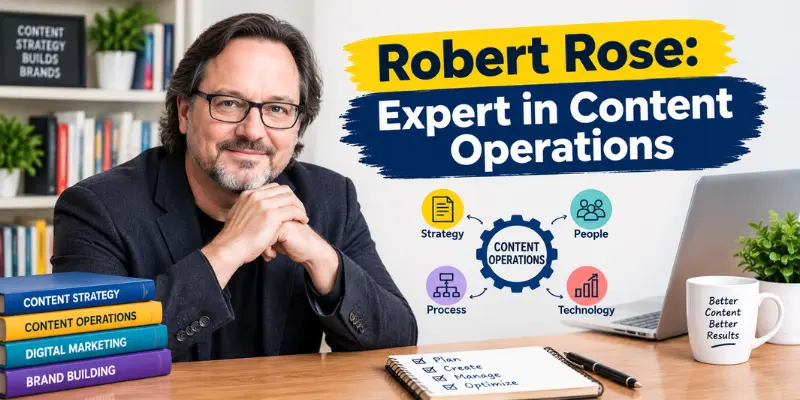
Robert Rose is known for his work in content strategy, marketing consulting, and helping organizations build effective content operations. His approach emphasizes that successful content marketing requires more than individual creative ideas.
Businesses need processes that support planning, production, distribution, governance, and performance measurement.
For example, a company may have talented writers but still struggle to publish consistently because nobody manages editorial priorities, approvals, research, deadlines, or distribution. A structured content operation can reduce these problems.
Another important lesson is that content marketing should connect with broader organizational objectives. Marketing teams need to understand how their work supports customer education, brand development, lead generation, and other business priorities.
Rose is particularly relevant to larger companies, marketing managers, agencies, and teams managing multiple content formats or departments.
You can explore his professional resources and work through the Content Marketing Institute.
5. Michael Brenner: Expert in Content Marketing and Business Growth
Michael Brenner is a marketing speaker, author, and strategist associated with Marketing Insider Group. His work focuses on content marketing, thought leadership, audience engagement, and the business value of useful content.
One important lesson from Brenner’s approach is that content should address customer problems rather than revolve exclusively around the company.
A business that repeatedly publishes product announcements may struggle to attract people who are still researching their options. By creating educational resources that explain common challenges, available solutions, and practical decision-making methods, the company can become more useful to potential customers.
Brenner’s work also encourages businesses to think about content as part of a larger growth strategy. The purpose is not simply to generate page views but to attract relevant audiences and help them move toward meaningful business relationships.
For example, a B2B company could publish an in-depth guide, distribute it through email and social media, and offer a relevant downloadable resource to readers who want additional information.
Michael Brenner is worth following if you work in B2B marketing, corporate communications, lead generation, or thought leadership.
Visit Marketing Insider Group to explore content marketing resources and insights.
For sustainable business growth, content should support the company’s wider marketing objectives rather than operate as an isolated activity. Our Marketing Fundamentals article offers a useful introduction to the principles behind an effective marketing approach.
6. Rebecca Lieb: Expert in Content Strategy and Digital Marketing
Rebecca Lieb is a recognized digital marketing analyst, author, and strategist whose work has explored content marketing, digital advertising, and marketing technology.
Her expertise is particularly relevant to businesses that want to understand how content fits into broader digital marketing operations.
A useful lesson from content strategy is that every asset should have a defined purpose. Before creating an article, video, infographic, or report, marketers should understand who needs it, what question it answers, how it will be distributed, and what outcome it should support.
This approach helps prevent content teams from producing large volumes of material without a clear reason.
For example, a detailed industry report may be appropriate for establishing expertise and supporting business-to-business sales conversations. A short tutorial may be more effective for answering a specific search query. A newsletter may help maintain relationships with an existing audience.
The format should follow the objective rather than the other way around.
Rebecca Lieb’s work is relevant to content strategists, marketing leaders, and organizations that want to improve the planning and management of their digital content.
Explore her published work and professional background through her website.
7. Jay Baer: Expert in Customer Experience and Brand Communication
Jay Baer is a marketing strategist, author, and speaker known for his work in customer experience, word-of-mouth marketing, and business communication.
Although his work extends beyond content marketing alone, his ideas are useful for businesses that want their content to build trust and strengthen customer relationships.
A central lesson is that marketing communication should provide a reason for people to pay attention. Content should be useful, distinctive, and connected to the audience’s needs.
For example, a home improvement company could publish practical maintenance guides that answer common homeowner questions. A software business could provide troubleshooting resources that help customers solve problems without contacting support for every minor issue.
Useful information can improve the customer experience while giving people a reason to return to a brand’s website.
Baer’s work is especially relevant to service businesses, customer-facing brands, and companies that want content to support customer satisfaction as well as acquisition.
You can explore his professional resources at Convince & Convert.
8. Jeff Bullas: Expert in Blogging and Digital Audience Development
Jeff Bullas is known for his work in blogging, digital marketing, social media, and online audience development. His website has long served as a resource for people interested in improving their digital presence.
One valuable lesson from audience development is that publishing content is only part of the process. Marketers must also make it discoverable and give relevant audiences opportunities to engage with it.
A well-written article can be supported by search optimization, email distribution, social sharing, and links to related resources. Different distribution methods may reach different groups of potential readers.
Consistency also matters. A business that publishes useful material around a clear subject can gradually build a more recognizable presence than one that publishes unrelated topics without an editorial direction.
However, consistency should not come at the expense of quality. Publishing frequency should reflect the team’s ability to research, produce, edit, and maintain valuable content.
Jeff Bullas is useful for bloggers, entrepreneurs, digital marketers, and small businesses seeking practical ideas for online visibility and audience development.
Visit Jeff Bullas’s official website for marketing articles and resources.
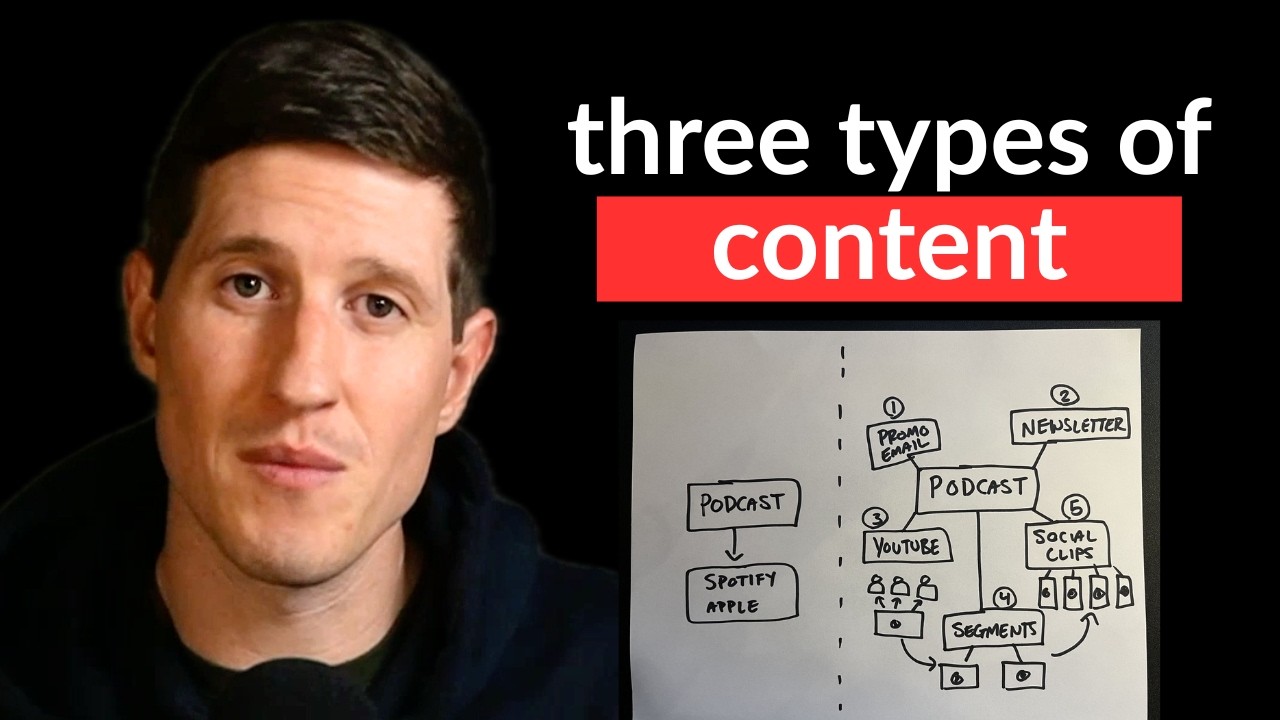
9. Jay Acunzo: Expert in Storytelling and Creative Content
Jay Acunzo is a writer, speaker, and storyteller known for his work on creative thinking, distinctive communication, and developing more meaningful business stories.
His work is particularly useful for marketers who feel their content has become repetitive or indistinguishable from competitors’ material.
A valuable lesson is that effective content should communicate a perspective rather than simply repeat familiar advice. Research, customer experiences, original observations, interviews, and practical examples can help create a more distinctive voice.
For example, instead of publishing a generic article titled “Five Ways to Improve Marketing,” a company could analyze a real campaign, explain the decisions behind it, identify the challenges encountered, and discuss the lessons other businesses can apply.
This approach gives readers something more specific to learn and can make the content more memorable.
Storytelling is not limited to entertainment. It can help explain complex ideas, illustrate customer problems, and communicate why a solution matters.
Jay Acunzo is worth studying if you create thought leadership content, podcasts, brand narratives, or educational material that needs a stronger editorial identity.
Explore his work through Jay Acunzo’s website.
10. Brian Dean: Expert in SEO and Search-Focused Content
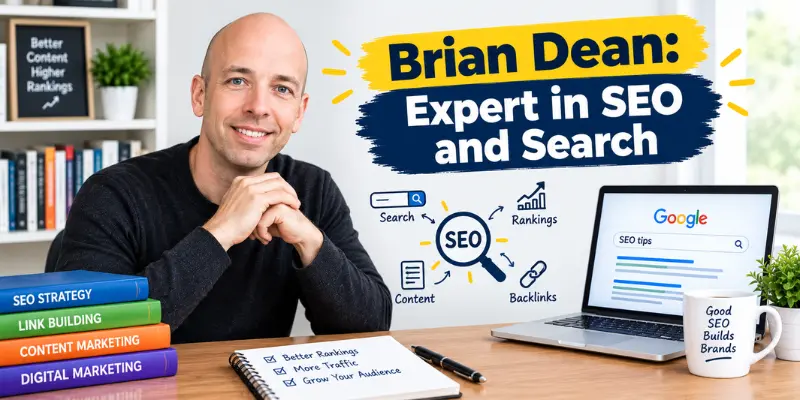
Brian Dean is known for his work in SEO, link building, and creating content designed to attract relevant search traffic. He founded Backlinko, which became a widely recognized resource for SEO education.
His work is particularly relevant to publishers and businesses that depend on organic search visibility.
One important lesson is to understand what people want when they search for a keyword. An article should answer the user’s question clearly and provide the level of detail that the subject requires.
Keyword research can help identify topics, but keyword selection alone does not guarantee rankings. Search intent, content usefulness, competition, site authority, internal links, and technical performance also influence results.
For example, a search for “content marketing examples” suggests that readers want examples they can examine and learn from. An article focused entirely on abstract definitions would not fully satisfy that intent.
Content marketers can also improve the usefulness of their articles by including practical examples, clear explanations, appropriate references, and logical links to related resources.
Brian Dean is particularly relevant to SEO specialists, bloggers, content publishers, and marketers who want to understand search-focused content development.
Explore SEO learning resources at Backlinko.
11. Ann Smarty: Expert in Content Marketing and Online Visibility
Ann Smarty is known for her work in content marketing, SEO, blogging, and digital visibility. Her professional experience includes helping marketers understand how content can be developed and promoted across online channels.
One valuable lesson is that content promotion deserves attention during the planning stage rather than being treated as an afterthought.
Before publishing a piece of content, marketers can identify the audiences most likely to benefit from it, relevant communities, appropriate social channels, potential newsletter placements, and other suitable distribution opportunities.
Promotion must remain relevant and respectful. Mass messaging, irrelevant link placement, and repetitive promotional posts can damage trust instead of building an audience.
Another useful approach is to connect content with real questions. Customer support conversations, industry discussions, search queries, and feedback can reveal topics that deserve more detailed coverage.
Ann Smarty is worth following if you want to learn more about blogging, online visibility, content promotion, and the relationship between content and SEO.
Explore her professional resources at SEOsmarty.
12. Heidi Cohen: Expert in Practical Marketing Education
Heidi Cohen is a marketing educator, strategist, and publisher of the Actionable Marketing Guide. Her work covers content marketing, social media, digital marketing, and practical marketing techniques.
Her approach is useful for readers who prefer structured educational material that explains marketing concepts and how they can be applied.
One important lesson is to turn marketing knowledge into actionable guidance. Instead of telling readers that consistency matters, a useful article can explain how to build an editorial calendar, assign responsibilities, establish review procedures, and measure results.
Similarly, an article about audience engagement can explain how to identify audience questions, select appropriate content formats, and encourage meaningful interaction.
This practical focus is especially useful for small businesses and marketing professionals who need ideas they can implement without building a large marketing department.
Heidi Cohen is a useful resource for marketers interested in content strategy, social media, editorial planning, and customer-focused communication.
Visit the Actionable Marketing Guide to explore her articles and educational resources.
How to Choose the Right Content Marketing Expert for Your Goals
Following the top content marketers can help you discover new approaches, but not every expert will be equally relevant to your situation. The best person to learn from depends on your experience, business model, marketing objectives, and the skills you want to develop.
If your main challenge is writing, start with Ann Handley. Her work is relevant to clear communication, storytelling, and creating content that respects the reader’s needs.
If you need a broader content strategy, Joe Pulizzi and Robert Rose provide useful perspectives on audience development, editorial focus, and content operations.
If you want to improve organic search visibility, study Brian Dean and Andy Crestodina. Their work can help you understand the relationship between search intent, content quality, analytics, and website performance.
If your objective is thought leadership and distinctive storytelling, Jay Acunzo offers a useful perspective on developing a recognizable voice and communicating original ideas.
For customer experience and brand communication, Jay Baer can help you think about how useful information supports customer relationships.
You should also distinguish between learning from an expert and hiring one. A professional who publishes excellent educational material may not necessarily be the best fit for your particular project, budget, industry, or delivery requirements.
Before making a decision, review the person’s recent work, relevant experience, case studies, and ability to address your specific needs.
How to Learn From the Top Content Marketers
The most effective way to learn from established experts is to turn their ideas into a practical process rather than simply collecting articles, books, and social media posts.
Start by selecting one skill to improve. This could be writing better introductions, understanding search intent, developing a content calendar, improving distribution, or measuring conversions.
Next, choose a few high-quality resources that focus on that skill. Read or study them carefully, paying attention to the reasoning behind the recommendations rather than copying individual tactics.
Then apply what you learn to a real project. If you are studying SEO, improve an existing article by clarifying its search intent, strengthening its structure, adding relevant internal links, and removing unnecessary information.
If you are learning storytelling, revise a piece of content to include a more specific problem, a practical example, and a clearer explanation of the lesson.
After implementation, review the results. Depending on the project, you might examine reader feedback, engagement, search visibility, leads, or conversions.
Finally, refine your approach. A technique that works for one business may not work equally well for another. The purpose of learning from experts is to develop better judgment, not to follow every recommendation without considering your own circumstances.
How Businesses Can Apply Expert Advice to Content Marketing
Businesses can apply the lessons of leading content marketers by developing a repeatable content creation and improvement process.
Begin with audience research. Identify the questions customers ask, the problems they want to solve, and the information they need before making a decision.
Next, establish a content strategy that connects these needs with business objectives. Choose topics that serve the audience and fit the company’s expertise.
Develop an editorial process for research, writing, editing, fact-checking, publishing, and maintenance. Clear responsibilities help maintain quality as the publishing operation grows.
Distribution should also be planned. Depending on the audience, an article might be supported by search optimization, a newsletter, social media, partnerships, or other relevant channels.
Measurement completes the process. Track metrics that match the purpose of the content. For example, educational articles may be evaluated using relevant organic traffic and engagement, while lead-generation content may be assessed through qualified inquiries and conversion rates.
Businesses should also review existing content before publishing additional articles. If several pages target nearly identical search intent, they may compete for similar queries or create an unnecessarily fragmented experience for readers.
A well-planned internal linking structure can help users discover related information and make the site’s content relationships clearer.
For a broader introduction to these concepts, explore our guide to Digital Marketing. You can also review Marketing Fundamentals to understand how content fits into the wider marketing mix.
Common Mistakes to Avoid When Following Content Marketing Experts
One common mistake is assuming that a popular expert’s approach will work for every business. Strategies should be adapted to the audience, budget, industry, resources, and business objectives.
Another mistake is focusing on vanity metrics alone. Followers, likes, and page views can provide useful context, but they do not automatically demonstrate business value. Relevant engagement, qualified leads, conversions, and customer relationships may be more important, depending on the objective.
Copying content is another problem. Learning from an expert does not mean reproducing their articles, distinctive language, or original work. Instead, identify the underlying principle and apply it in your own voice using your own research and examples.
Businesses should also avoid changing direction too frequently. Testing new ideas is useful, but abandoning a strategy after a short period may prevent meaningful evaluation, especially when results depend on search visibility or long-term audience development.
Finally, avoid treating content marketing as a publishing-only activity. Research, distribution, measurement, maintenance, and continuous improvement are essential parts of a sustainable process.
Frequently Asked Questions About Top Content Marketers
Who are the top content marketers to follow in 2026?
Notable professionals to study include Ann Handley, Joe Pulizzi, Andy Crestodina, Robert Rose, Michael Brenner, Rebecca Lieb, Jay Baer, Jeff Bullas, Jay Acunzo, Brian Dean, Ann Smarty, and Heidi Cohen. Each offers a different perspective on writing, strategy, SEO, audience development, or marketing communication.
Who is the best content marketer for beginners?
The best starting point depends on the skill you want to develop. Ann Handley is a useful resource for writing, while Joe Pulizzi offers valuable perspectives on content strategy. Beginners interested in search-focused content can also explore Brian Dean’s SEO resources.
What skills do successful content marketers need?
Important skills include audience research, writing, editing, storytelling, content strategy, SEO, distribution, analytics, project management, and an understanding of business objectives. The relative importance of each skill depends on the role.
How can I find a content marketer for my business?
Start by defining the work you need completed. Review relevant writing samples, industry experience, case studies, communication skills, and the person’s approach to research and measurement. For ongoing work, also evaluate project management, consistency, and the ability to respond to feedback.
Are content marketing experts and content creators the same?
The roles overlap, but they are not identical. Content creators primarily produce material such as articles, videos, graphics, or social posts. Content marketing experts may also develop strategy, manage distribution, coordinate teams, conduct research, and measure business performance.
How do content marketers measure success?
Success depends on the objective. Useful measures can include qualified organic traffic, audience engagement, newsletter subscriptions, leads, conversion rates, customer acquisition cost, assisted conversions, and revenue. A suitable measurement framework connects these metrics to business goals.
Can small businesses benefit from content marketing experts?
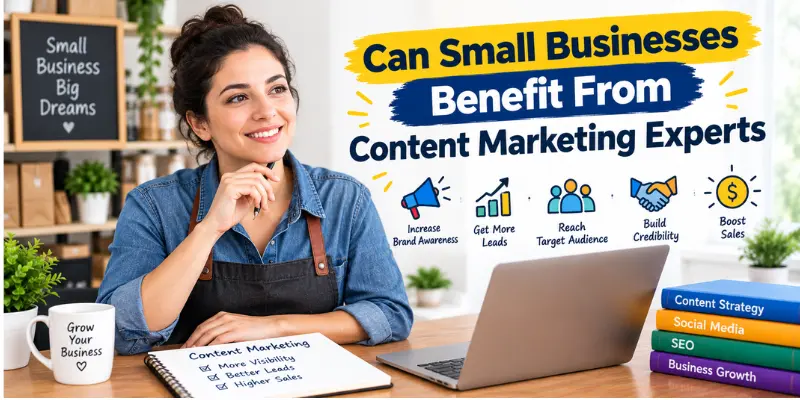
Yes. Small businesses can learn from expert resources without hiring a full-time specialist. They can apply practical guidance to improve their website content, build a focused publishing plan, strengthen distribution, and measure results. When specialized help is needed, a freelancer or consultant may be appropriate.
If you want to explore practical marketing techniques and foundational concepts, read our guide to Recent Innovative Marketing Examples and our Marketing Fundamentals guide. These resources can help you connect content marketing ideas with broader business practices.
Conclusion
The top content marketers offer valuable lessons in writing, strategy, SEO, storytelling, audience development, and customer communication. Their work can help businesses move beyond publishing content for its own sake and develop a more deliberate approach to attracting, educating, and engaging their audiences.
However, the right expert depends on your goals. Ann Handley is a useful resource for writing, Joe Pulizzi for content strategy, Andy Crestodina and Brian Dean for SEO-related learning, and Robert Rose for content operations. Other professionals offer valuable perspectives on storytelling, customer experience, promotion, and practical marketing education.
The most important step is to choose relevant resources, apply their lessons to real projects, and evaluate the results. Combine audience research with useful content, appropriate distribution, clear objectives, and continuous improvement.
By learning from experienced professionals and adapting their ideas to your own audience, you can develop a more effective content marketing process that supports both reader needs and sustainable business growth.





- Be Respectful
- Stay Relevant
- Stay Positive
- True Feedback
- Encourage Discussion
- Avoid Spamming
- No Fake News
- Don't Copy-Paste
- No Personal Attacks
- Be Respectful
- Stay Relevant
- Stay Positive
- True Feedback
- Encourage Discussion
- Avoid Spamming
- No Fake News
- Don't Copy-Paste
- No Personal Attacks
