Digital Marketing: Complete Guide to Strategies, Types, Channels, and Benefits
Published: 02 Oct 2026
Digital marketing has become an important part of how businesses attract customers, build awareness, generate leads, and increase sales. Instead of depending only on traditional channels such as newspapers, television, radio, and billboards, businesses can now reach specific audiences through search engines, websites, social media, email, mobile devices, online advertising, and other digital platforms.
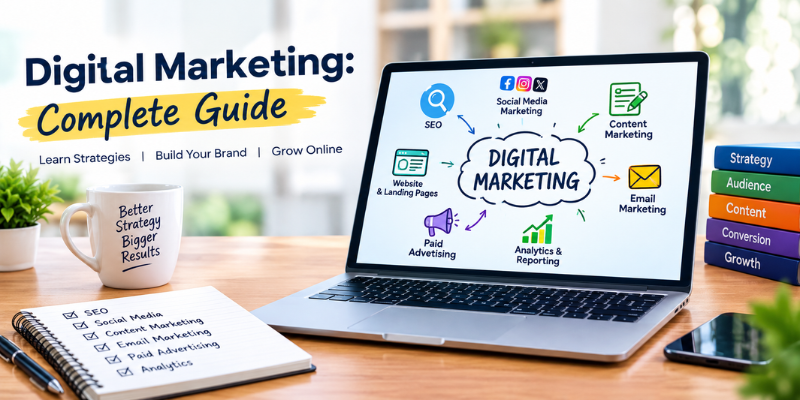
For small businesses, startups, ecommerce stores, service providers, and established companies, digital marketing provides multiple ways to communicate with potential customers throughout their buying journey. A business can use search engine optimization to attract people looking for information, content marketing to educate them, social media to build relationships, email to nurture leads, and paid advertising to reach specific audiences quickly.
The most effective approach is not simply to use every available channel. Instead, businesses need to understand their goals, audience, resources, customer journey, and available data before selecting the right combination of digital marketing methods.
What Is Digital Marketing?
Digital marketing is the use of digital channels, platforms, technologies, and data to promote products, services, brands, or organizations and connect with customers. It includes activities performed through search engines, websites, social media platforms, email, mobile applications, online advertising, content platforms, and other digital environments.
The concept is broader than simply advertising on the internet. A complete digital marketing strategy can include organic search visibility, paid advertising, educational content, social engagement, email communication, influencer partnerships, video, mobile marketing, and analytics.
One important characteristic of digital marketing is measurability. Businesses can monitor activities such as website visits, clicks, engagement, leads, conversions, and sales. This information can then be used to identify what is working and where improvements are needed.
Digital marketing also allows businesses to communicate with different audiences at different stages of the customer journey. Someone who has never heard of a company may first discover it through a search result or social media post. Another person may already know the brand and need a product comparison, email reminder, review, or offer before making a purchase.
This makes digital marketing more than a collection of promotional tactics. It is a system for connecting a business with its audience through digital touchpoints.
For a broader introduction to marketing concepts, readers can also explore the Marketing Fundamentals guide.
How Does Digital Marketing Work?
Digital marketing generally starts with a business objective. The objective might be increasing brand awareness, attracting website traffic, generating leads, increasing ecommerce sales, promoting a new service, or retaining existing customers.
The next step is identifying the people the business wants to reach. Understanding the target audience helps marketers decide what type of message to create, which channels to use, and what action they want visitors to take.
For example, a software company selling business solutions may focus on search engine optimization, educational articles, LinkedIn content, webinars, email marketing, and search advertising. A fashion retailer may rely more heavily on visual social media, influencer partnerships, video content, ecommerce SEO, email campaigns, and paid social advertising.
After selecting appropriate channels, the business creates and distributes content or advertisements. Performance is then measured through relevant metrics. Based on the results, campaigns can be adjusted, tested, expanded, or stopped.
This creates a continuous cycle:
Goal → Audience → Channel → Content or Campaign → Measurement → Optimization
The process is rarely completely linear. Customers may discover a business through social media, visit the website later through Google, subscribe to an email list, return through a paid advertisement, and finally purchase after reading customer reviews.
Therefore, businesses should consider the complete customer journey rather than treating every channel as an isolated activity.
Why Is Digital Marketing Important?
The importance of digital marketing comes from the way customers discover, research, compare, and purchase products and services. People increasingly use digital platforms to find information and interact with businesses.
A strong online presence can help a company become discoverable when potential customers are actively searching for solutions. It can also help a business communicate its value before a customer contacts the company or makes a purchase.
Another important advantage is measurability. Traditional advertising can be difficult to connect directly with individual actions, while digital campaigns can provide detailed information about traffic, clicks, engagement, leads, and conversions.
Digital marketing can also support personalization. Different audience segments can receive different messages based on their interests, behavior, location, previous interactions, or stage in the buying process.
Cost flexibility is another consideration. Businesses can work with organic strategies such as SEO and content marketing, paid campaigns with controlled budgets, or a combination of both.
However, digital marketing is not automatically inexpensive or successful. Competition can be intense, platforms change frequently, audiences become more selective, and poorly planned campaigns can waste time and money.
The value comes from using the right strategy for the right audience and continuously learning from measurable results.
Main Types of Digital Marketing
Digital marketing includes several interconnected disciplines. A business does not necessarily need to use all of them. The appropriate combination depends on its objectives, audience, industry, budget, and resources.
Search Engine Optimization
Search engine optimization, commonly called SEO, involves improving website content and technical elements so that search engines can understand the site and users can discover relevant pages through search.
SEO can include keyword research, helpful content, internal linking, technical improvements, page structure, descriptive titles, image optimization, and earning relevant references from other websites.
The purpose is not simply to rank for as many keywords as possible. A useful SEO strategy focuses on matching content with genuine search intent and providing a satisfactory experience for visitors.
Businesses can use SEO to attract users searching for educational information, product comparisons, local services, solutions, or specific products.
Google’s SEO documentation explains that SEO helps search engines understand content and helps users discover websites through search.
Content Marketing
Content marketing involves creating useful information that attracts and engages a defined audience. Content can include blog posts, guides, tutorials, videos, infographics, case studies, newsletters, podcasts, and other educational resources.
Instead of making every interaction a direct sales pitch, content marketing can answer questions and solve problems that potential customers have before purchasing.
For example, a financial software company could publish articles explaining budgeting, accounting processes, business finance, and financial planning. A home improvement company could publish maintenance guides and project tutorials.
Good content can support other digital marketing activities as well. A blog article can receive organic search traffic, be shared on social media, included in an email newsletter, and referenced in a paid campaign.
Social Media Marketing
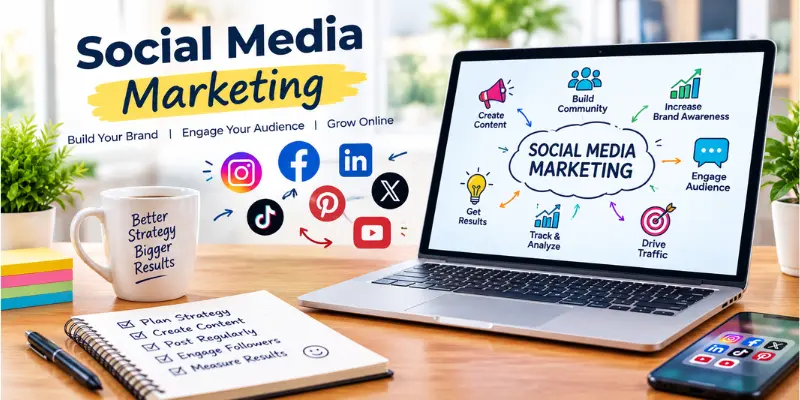
Social media marketing uses platforms such as Facebook, Instagram, LinkedIn, TikTok, YouTube, Pinterest, and other networks to communicate with audiences.
Businesses can use social media for brand awareness, community building, customer communication, product education, traffic generation, lead generation, and direct sales.
The best platform depends on the audience and business model. A B2B company may focus heavily on professional networks, while a consumer brand may find visual platforms more useful.
Social media also provides opportunities for two-way communication. Customers can comment, ask questions, share experiences, and interact with a brand publicly.
Businesses using influencers or sponsored content should also understand applicable advertising disclosure requirements. The U.S. Federal Trade Commission provides guidance on endorsements, influencers, and material connections.
Email Marketing
Email marketing involves communicating with subscribers through email. It can be used for newsletters, educational content, product announcements, promotions, onboarding, reminders, and customer retention.
One advantage of email is that businesses can communicate directly with people who have chosen to receive messages. Marketers can segment audiences and send more relevant content according to subscriber interests or behavior.
Automation can also help businesses deliver timely messages. For example, a new subscriber might receive a welcome sequence, while an existing customer might receive educational content or product updates.
Email marketing becomes more useful when it is based on permission, relevance, clear messaging, and appropriate frequency rather than sending large volumes of unrelated promotions.
Pay-Per-Click Advertising
Pay-per-click advertising, commonly called PPC, allows businesses to pay for advertising placements and traffic according to the advertising model used by the platform.
Search advertising can place ads in front of users who are actively searching for specific products or services. Social advertising can use audience characteristics and platform signals to reach selected groups.
PPC can produce traffic more quickly than many organic strategies, but it requires careful management. Businesses need appropriate targeting, compelling advertisements, relevant landing pages, budget controls, and performance measurement.
Google provides official resources for businesses learning how to create and optimize Google Ads campaigns.
Affiliate Marketing
Affiliate marketing involves partnerships in which another person or organization promotes a product or service and receives compensation based on defined results, such as sales or leads.
It can help businesses extend their reach without relying entirely on their own audience. Affiliates may use websites, social platforms, newsletters, videos, or other channels to promote products.
Clear agreements, accurate product claims, appropriate disclosures, and reliable tracking are important for sustainable affiliate programs.
Influencer Marketing
Influencer marketing involves collaborating with people who have an established audience and influence within a particular niche or community.
The effectiveness of an influencer campaign depends on more than follower count. Audience relevance, engagement, credibility, content quality, and the relationship between the creator and the product can all matter.
Businesses should also make sure sponsored relationships are disclosed appropriately. Clear disclosure helps audiences understand when promotional content involves a material connection between the creator and a brand.
Video Marketing
Video marketing uses video content to educate, entertain, demonstrate, or persuade an audience.
Businesses can create tutorials, product demonstrations, customer stories, interviews, behind-the-scenes content, educational videos, webinars, and short-form clips.
Video can also support SEO and social media strategies. A long educational video can be converted into shorter clips, a written article, social posts, and email content.
The goal should be to create useful video content for a specific audience rather than producing video simply because the format is popular.
Mobile Marketing
Mobile marketing focuses on reaching customers through smartphones and other mobile devices. It can include mobile-friendly websites, applications, SMS, mobile advertising, social media, and location-related experiences.
Because many customers interact with businesses through mobile devices, websites and landing pages need to be easy to navigate on smaller screens.
Mobile marketing should also respect user permissions and privacy expectations, particularly when businesses collect or use personal information.
Digital Marketing Channels and Their Roles
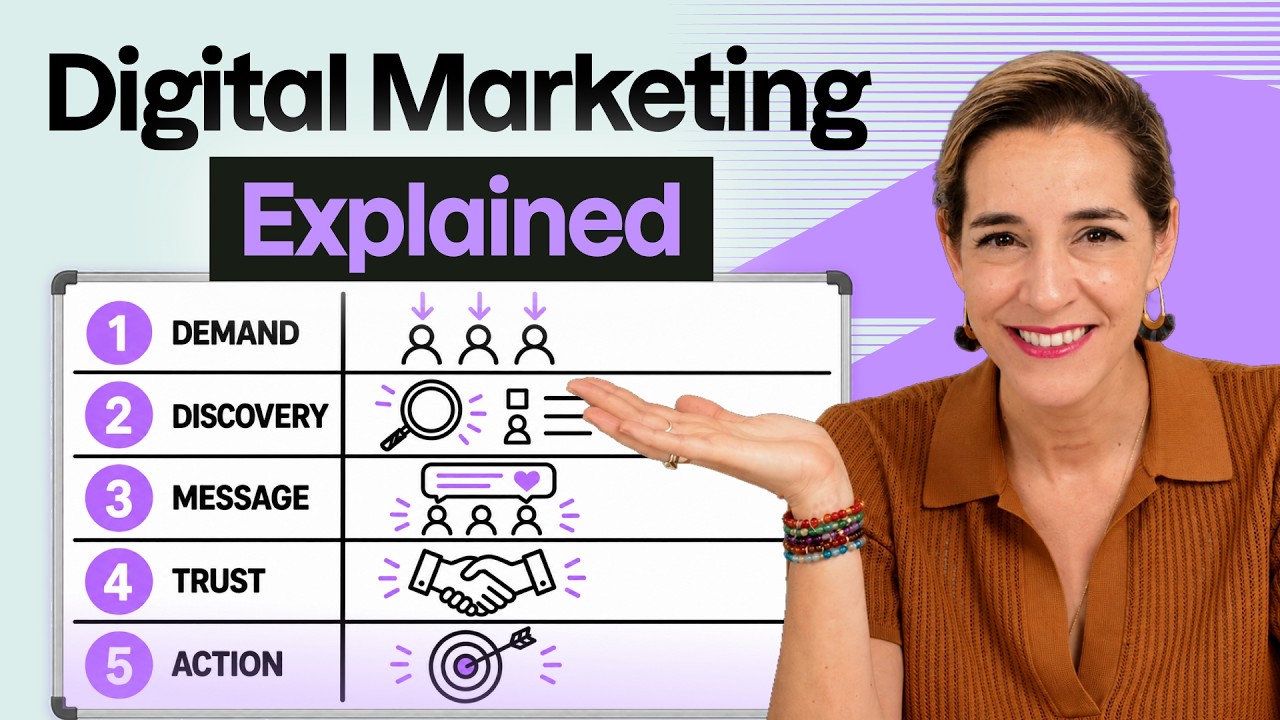
Different channels can perform different functions within a customer journey.
Search engine optimization can attract users who are actively looking for information. Content marketing can educate them. Social media can create awareness and interaction. Email can nurture relationships. Paid advertising can increase visibility for specific campaigns. Video can demonstrate products and explain complex ideas.
These channels often work better together than separately.
For example, a business could publish an educational article, optimize it for relevant searches, share it on social media, promote it through an email newsletter, and use paid advertising to reach a specific audience.
This integrated approach can create multiple opportunities for people to interact with the business.
The goal should not be to place identical content everywhere. Instead, each channel should contribute something appropriate to the user’s context.
How to Create a Digital Marketing Strategy
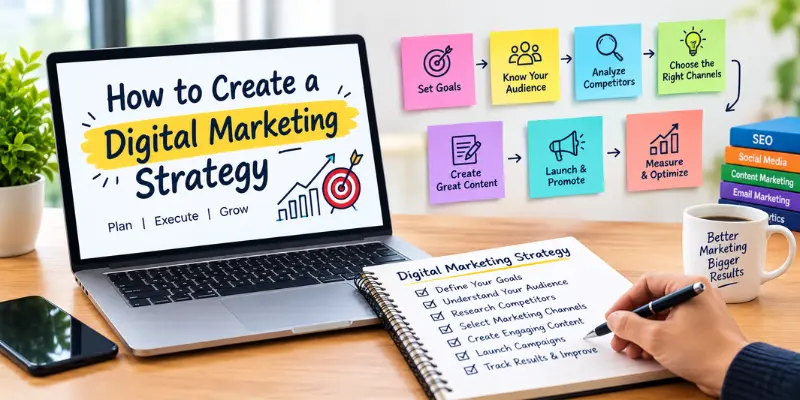
A digital marketing strategy provides direction for online marketing activities. Without a strategy, businesses may publish content or run campaigns without knowing whether those activities contribute to meaningful business objectives.
Start by defining the primary goal. A goal might involve increasing qualified traffic, generating leads, increasing online sales, improving customer retention, or launching a new product.
Next, identify the target audience. Consider who the ideal customers are, what problems they have, what information they need, and where they spend time online.
Then select appropriate channels. Do not choose channels simply because competitors are using them. Choose channels based on audience behavior, business objectives, resources, and expected opportunities.
Create content or campaigns that match the audience’s needs. Someone in the awareness stage may need educational information, while someone close to purchasing may need pricing information, product comparisons, demonstrations, or customer reviews.
After launching campaigns, measure the results and identify areas for improvement.
Adobe’s digital marketing guidance similarly emphasizes setting goals, identifying the target audience, selecting appropriate channels, and using measurable objectives to guide strategy.
Digital Marketing for Small Businesses
Small businesses can use digital marketing without trying to compete on every platform.
A practical starting point is usually a professional website with clear information about products or services. Local or service businesses can also focus on search visibility, useful educational content, customer reviews, email communication, and selected social platforms.
A small company should identify the channels most closely connected to its customers instead of spreading limited resources across every available platform.
For example, a local accounting firm might prioritize local SEO, informative articles, Google Business visibility, email communication, and professional social media. An online fashion store might prioritize ecommerce SEO, visual content, social media, email, influencer partnerships, and paid advertising.
The important point is alignment. A small business can build a strong digital marketing system by doing a smaller number of activities consistently and measuring the results.
Digital Marketing for B2B Companies
B2B digital marketing often involves longer buying journeys because several people may participate in a purchasing decision.
Content can therefore play an important role in educating potential buyers. Businesses can publish industry guides, research, comparison pages, case studies, webinars, reports, and detailed product information.
Search engine optimization can attract people researching business problems, while LinkedIn and email can support professional communication.
B2B marketers should also connect marketing metrics with business outcomes. Traffic is useful, but qualified leads, sales opportunities, customer acquisition, and revenue may provide a more meaningful picture of performance.
Digital Marketing for Ecommerce
Ecommerce businesses can use digital marketing throughout the customer journey.
SEO can help product and category pages appear in relevant searches. Content marketing can answer product-related questions. Social media can create awareness and demonstrate products. Paid advertising can bring targeted traffic. Email can support abandoned-cart reminders, product recommendations, promotions, and retention.
Product pages should also provide clear information about features, pricing, availability, shipping, returns, and other factors that influence purchase decisions.
The objective is to remove unnecessary friction between discovery and purchase.
Important Digital Marketing Metrics
Measuring performance is one of the most important parts of digital marketing.
Website traffic shows how many people are visiting a site, but traffic alone does not tell the complete story.
Click-through rate can show how frequently people click an advertisement, search result, email link, or other promotional element relative to impressions.
Conversion rate measures the percentage of users who complete a desired action. Depending on the business, a conversion could be a purchase, form submission, phone call, signup, download, or booking.
Cost per lead measures how much a business spends to acquire a lead through a particular campaign.
Customer acquisition cost considers the cost associated with gaining customers and can help businesses evaluate the economic efficiency of marketing activities.
Return on investment can help connect marketing expenditure with financial outcomes, although calculating meaningful ROI can be more complicated for long-term brand-building activities.
Engagement metrics such as comments, shares, video views, and email interactions can provide additional information about audience response.
Google Analytics can be used to collect website and app data and create reports that help businesses understand how users interact with their digital properties.
The Role of Analytics in Digital Marketing
Analytics turns digital marketing activity into measurable information.
A business can use analytics to understand where visitors come from, which pages they visit, what actions they take, and which campaigns contribute to conversions.
The purpose is not simply to collect large amounts of data. Businesses need to identify the metrics that connect to their objectives.
For example, an ecommerce company may monitor product views, add-to-cart actions, purchases, and revenue. A service business may focus on contact-form submissions, calls, qualified leads, and booked appointments.
Google Analytics documentation explains how businesses can collect data from websites and apps and use events and conversions to measure valuable actions.
Analytics can also reveal weak points in the customer journey. If a page receives significant traffic but very few visitors take the desired action, the business may need to examine the content, offer, design, page speed, trust signals, or call to action.
Common Digital Marketing Mistakes
One common mistake is trying to use every digital channel at once. This can spread resources too thin and make it difficult to maintain quality.
Another mistake is focusing entirely on traffic. A website can receive thousands of visitors without generating meaningful business results if those visitors are not relevant or the website does not guide them toward useful actions.
Ignoring the target audience is another problem. Content should answer real questions and address real needs.
Businesses can also make mistakes by copying competitors without understanding why a strategy works. A campaign that performs well for one company may not produce the same results for another audience or industry.
Poor measurement is another issue. If a business does not establish goals and track relevant metrics, it becomes difficult to understand whether marketing activities are contributing to business objectives.
Finally, businesses should avoid misleading claims, fake reviews, undisclosed commercial relationships, or manipulative tactics. Trust is an important part of long-term digital marketing.
Digital Marketing and Customer Experience
Digital marketing is closely connected to customer experience.
A person may see an advertisement, click a landing page, read an article, subscribe to an email list, speak with a salesperson, and eventually purchase. Every interaction contributes to their perception of the business.
A strong campaign can therefore be weakened by a slow website, confusing navigation, poor mobile design, unclear pricing, difficult checkout, or irrelevant follow-up emails.
Marketers should consider what happens after the click.
The advertisement creates an expectation. The landing page needs to fulfill it. The next step should be clear. The purchasing or signup process should be straightforward.
This is why digital marketing should not be treated as advertising alone. It is part of the broader customer experience.
Digital Marketing Trends
Digital marketing continues to evolve as technologies and consumer behavior change.
Artificial intelligence is increasingly being used for tasks such as content assistance, personalization, customer support, analytics, and campaign optimization. However, businesses still need human oversight to ensure that content is accurate, useful, original, and appropriate for the audience.
Short-form video remains an important format on many social platforms. Businesses are also experimenting with interactive content, automation, personalization, conversational experiences, and data-driven customer journeys.
Privacy is another important consideration. Businesses need to understand how they collect, store, and use customer information and comply with applicable laws and platform requirements.
Search is also changing. Search engines increasingly provide richer results and AI-supported experiences, making it even more important for businesses to create clear, useful, trustworthy content.
For additional discussion of modern marketing developments, readers can explore Recent Innovative Marketing Examples.
How to Improve a Digital Marketing Campaign
Improvement should begin with data rather than assumptions.
First, identify the campaign’s original objective. Then examine the metrics connected to that objective.
If traffic is low, investigate visibility, targeting, content distribution, and audience demand. If traffic is strong but conversions are weak, examine the landing page, offer, user experience, trust signals, and call to action.
Testing can also help. Businesses can experiment with headlines, landing pages, advertisements, email subject lines, offers, creative formats, and calls to action.
However, tests should have a clear purpose. Changing several major elements at the same time can make it difficult to identify which change produced the result.
Successful optimization is usually continuous rather than a one-time activity.
Digital Marketing vs Traditional Marketing
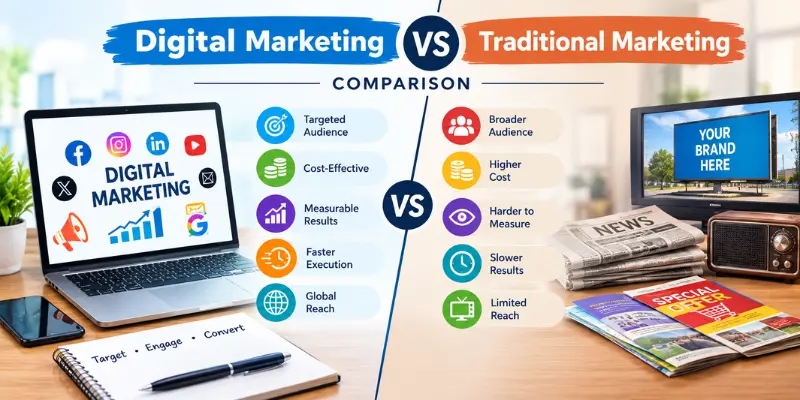
Traditional marketing uses channels such as television, radio, newspapers, magazines, direct mail, and outdoor advertising. Digital marketing uses digital platforms and technologies to reach and engage audiences.
The distinction is not simply online versus offline. The two approaches can work together.
For example, a company launching a product might use outdoor advertising for broad awareness while using search advertising, social media, email, and content marketing to support digital discovery and conversion.
The appropriate choice depends on the audience, objectives, budget, industry, and campaign requirements.
Frequently Asked Questions About Digital Marketing
What is digital marketing in simple words?
Digital marketing means promoting a business, product, service, or brand through digital channels such as websites, search engines, social media, email, mobile platforms, and online advertising.
What are the main types of digital marketing?
Major types include SEO, content marketing, social media marketing, email marketing, PPC advertising, affiliate marketing, influencer marketing, video marketing, and mobile marketing.
Why is digital marketing important for businesses?
Digital marketing can help businesses reach specific audiences, build awareness, attract website visitors, generate leads, communicate with customers, and measure campaign performance.
Is SEO part of digital marketing?
Yes. SEO is one of the major components of digital marketing. It focuses on improving a website’s visibility and usefulness in search engine results.
Is digital marketing only for online businesses?
No. Local businesses, service providers, B2B companies, retailers, manufacturers, professionals, and organizations can all use digital marketing.
How can a small business start digital marketing?
A small business can begin by defining its target audience and goals, creating a useful website, improving search visibility, publishing helpful content, selecting relevant social platforms, and measuring results.
How do you measure digital marketing success?
Success can be measured using metrics such as qualified traffic, leads, conversions, conversion rate, cost per lead, customer acquisition cost, revenue, and return on investment.
What is the difference between digital marketing and online marketing?
The terms are often used interchangeably, although digital marketing can be broader. Digital marketing may include digital channels beyond strictly internet-based activities, while online marketing specifically focuses on internet-based channels.
Conclusion
Digital marketing provides businesses with a broad range of ways to reach, educate, engage, and convert customers. From SEO and content marketing to social media, email, PPC, video, affiliate marketing, and analytics, each channel can play a different role in the customer journey.
The goal should not be to use every available platform. A successful digital marketing strategy starts with clear objectives, a well-defined audience, appropriate channels, useful content, measurable KPIs, and continuous optimization.
Businesses that understand their customers and use data responsibly can make more informed marketing decisions. At the same time, maintaining transparency, accuracy, privacy, and a positive customer experience helps create a stronger foundation for long-term growth.
As digital channels continue to evolve, the fundamental principle remains the same: understand what customers need, provide genuine value, reach them through relevant channels, and use reliable data to improve the experience.





- Be Respectful
- Stay Relevant
- Stay Positive
- True Feedback
- Encourage Discussion
- Avoid Spamming
- No Fake News
- Don't Copy-Paste
- No Personal Attacks
- Be Respectful
- Stay Relevant
- Stay Positive
- True Feedback
- Encourage Discussion
- Avoid Spamming
- No Fake News
- Don't Copy-Paste
- No Personal Attacks
